
Audit at the highest atmospheric monitoring station and a visit to the German Embassy in La Paz

La Paz, 08.05.2026 – Alfred Wiedensohler

Discussions on the future of Chacaltaya


The visit to the Chacaltaya Research Station (CHC) in Bolivia (5,240–5,380 m above sea level) at the end of April 2026 had several important scientific, technical and strategic objectives. As part of the UBA-WCCAP core funding, CHC acts as a so-called twinning station for the WCCAP. As Chacaltaya is also a global station within the WMO’s Global Atmosphere Watch (GAW) programme, regular GAW audits are scheduled. These are carried out by myself, amongst others, and serve to ensure the high-quality standards of the atmospheric measurements on site.


In addition, the project provides funding for necessary consumables to support the long-term operation of the measuring station. Technical support and maintenance of the on-site instrumentation is also part of the collaboration, in particular provided by Kay Weinhold from TROPOS. As part of the visit, a full working day was therefore spent directly at the CHC station to check the current condition of the measurement systems, discuss technical issues and evaluate further support requirements.


Another key item on the agenda was attendance at the inauguration of the new monitoring station at El Alto Airport. This station serves as a background monitoring station on the Altiplano and represents a valuable addition to the regional atmospheric observation infrastructure in Bolivia.


Furthermore, CHC will also play a significant role in the European research infrastructure context in future. The station is set to become a French ACTRIS station in the future. Against this backdrop, an initial ACTRIS pre-audit was carried out in parallel with the GAW audit. The aim was to assess the extent to which the existing measurement and operational conditions already meet ACTRIS requirements and what further developments are necessary to achieve this.


During the visit, internal discussions also took place regarding future European support for the station. Participants included representatives from TROPOS, PSI, CNRS, Stockholm University, the University of Helsinki and MeteoSwiss. The focus was on issues relating to long-term scientific cooperation, technical support and the station’s international networking.


Another highlight was my invitation to the German Embassy. The German Ambassador showed great interest in the international involvement surrounding the Chacaltaya research station, as well as in European support for atmospheric research in Bolivia. The importance of long-term environmental monitoring and international scientific cooperation was emphasised during the visit.


Prof. Alfred Wiedensohler, Director of the Central Facility “European Center for Aerosol Calibration & Characterization” in the frame of European Research Infrastructure Consortium ACTRIS


Links: 

Center for Aerosol In-Situ - European Center for Aerosol Calibration and Characterization (CAIS-ECAC) https://www.actris-ecac.eu/

Chacaltaya Global GAW Station (CHC) http://www.chacaltaya.edu.bo/


The Chacaltaya Research Station (CHC) in Bolivia (5,240–5,380 m above sea level) is considered the highest observatory in the world and is a key station in the World Meteorological Network. Photo: Alfred Wiedensohler, TROPOS

As Chacaltaya (CHC) is a station participating in the WMO’s Global Atmosphere Watch (GAW) programme, regular GAW audits are scheduled. These are carried out by Alfred Wiedensohler and his colleagues at TROPOS, amongst others, and serve to ensure that the atmospheric measurements taken on site meet high quality standards. Photo: Alfred Wiedensohler, TROPOS

CHC is set to play a significant role in the European research infrastructure landscape in the future. The station is expected to become a French ACTRIS station in the future. Photo: Kay Weinhold, TROPOS

Inauguration of the new measuring station at El Alto Airport. Photo: Kay Weinhold, TROPOS

This station serves as a background monitoring station on the Altiplano and represents a valuable addition to the regional atmospheric observation infrastructure in Bolivia. Photo: Kay Weinhold, TROPOS
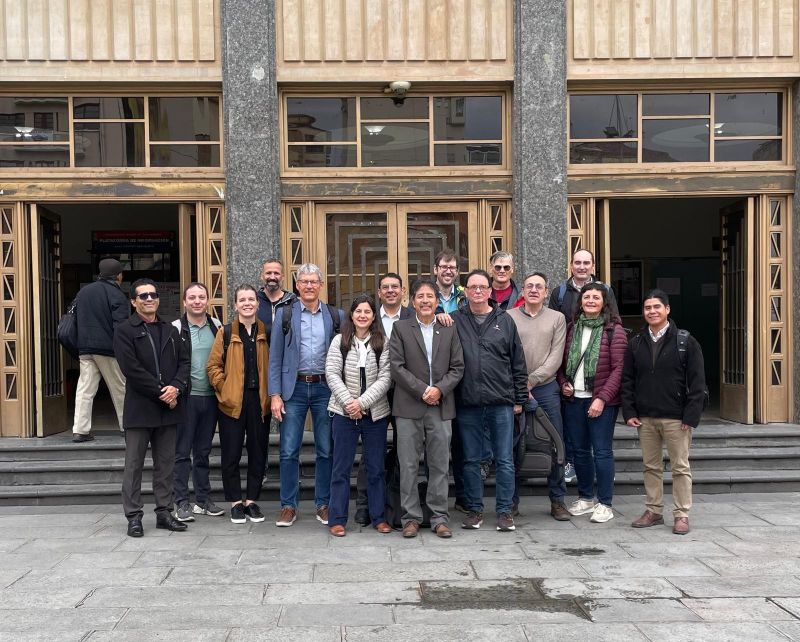
Group photo with representatives from the Universidad Mayor de San Andrés (Bolivia), TROPOS (Germany), PSI (Switzerland), CNRS (France), Stockholm University (Sweden), the University of Helsinki (Finland) and MeteoSwiss (Switzerland).
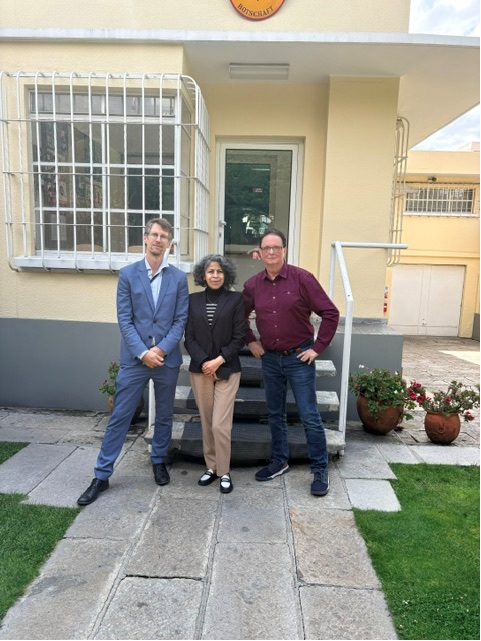
Visit by Prof. Alfred Wiedensohler (right) to the German Embassy in La Paz. Photo. Kay Weinhold, TROPOS