
The department ‘Remote Sensing of Atmospheric Processes’ focuses on satellite- and ground-based remote sensing of aerosols and clouds. Our mission is to investigate how aerosols and clouds form, how they change over their life cycle, and how they are distributed in space and time.
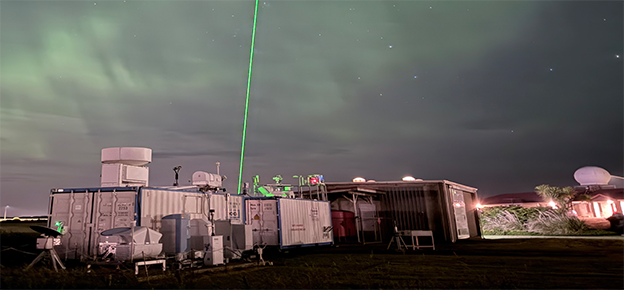
Based on observations, we investigate how aerosols and clouds interact and thereby influence energy and material fluxes. For this research, we also develop our own ground-based and satellite-based active and passive remote sensing techniques, along with corresponding analysis algorithms. These are deployed in key climatological regions worldwide and operated over periods of years and decades. The synergy between different remote sensing systems enables us to investigate the microphysical processes involved in cloud, ice and precipitation formation and to explore their role in the water cycle and radiative forcing.
Our work is supported by close collaboration within our institute, for example in modelling individual atmospheric processes and their impact on the climate, or in conducting in situ and laboratory investigations of the aerosol-cloud-precipitation-radiation cycle. Externally, the department is involved in the development and use of international ground-based remote sensing networks and novel satellite-based missions.
The implementation of this mission is organised into four teams, whose work ranges from the development of active remote sensing techniques and their application to understanding the distribution and interaction of aerosols and clouds, through to determining their climatological impact.
Teams
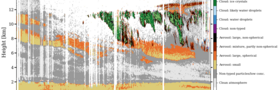
Research and algorithm development on atmospheric aerosols and clouds using ground-based and space-based lidar data.
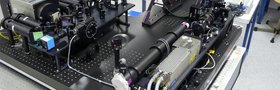
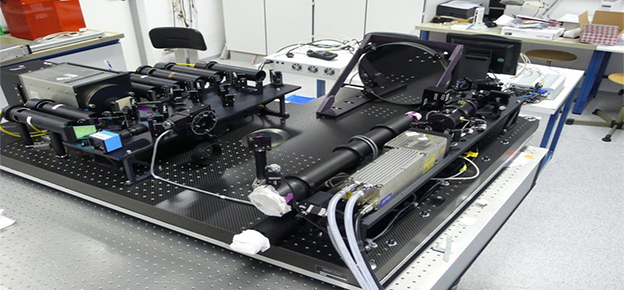
Development of lidar systems for atmospheric remote sensing of aerosols.
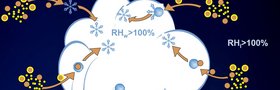
Research into aerosol-cloud interactions using radar and lidar data.
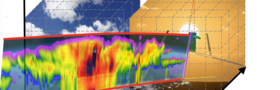
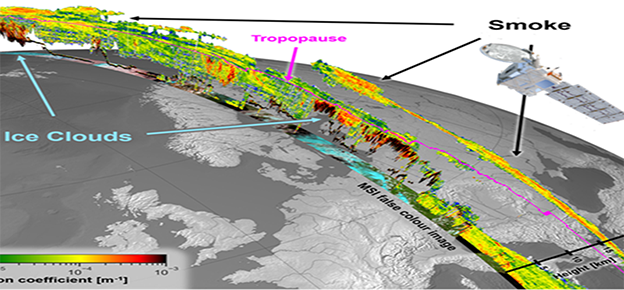
Satellite remote sensing and radiative effects in the atmosphere