
-
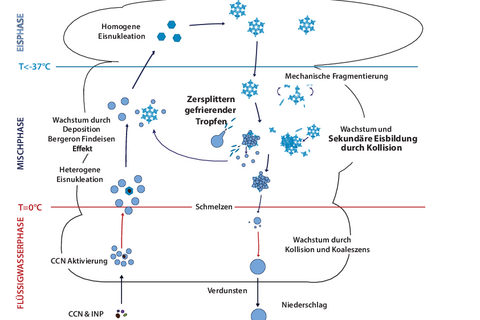
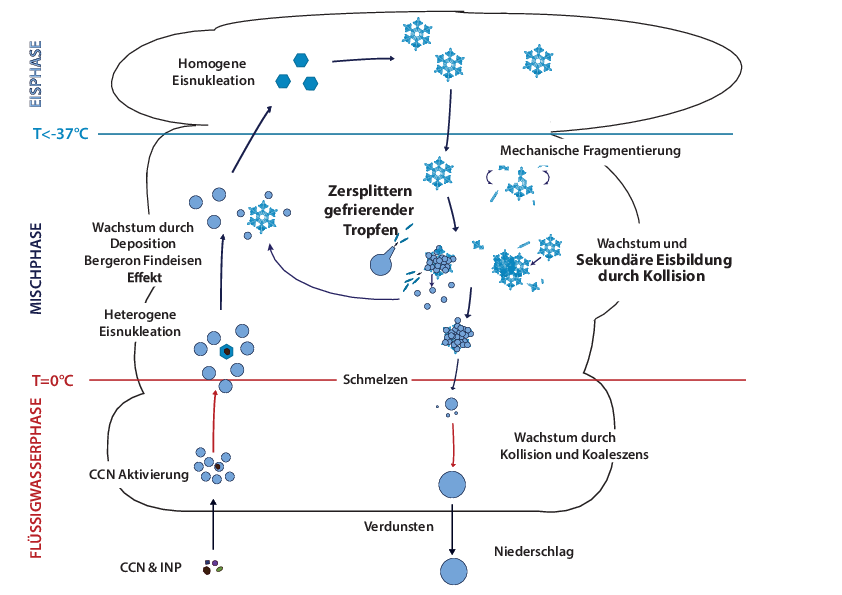
Fig. 1: Schematic representation of the microphysical processes in a mixed phase cloud regarding secondary ice production, source: Susan Hartmann/TROPOS.
-
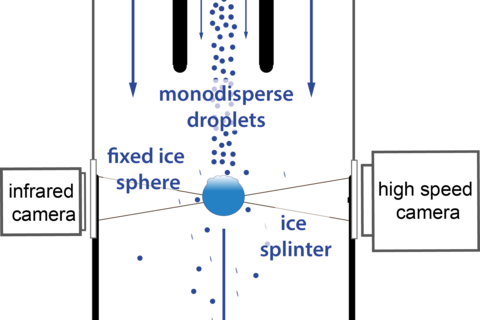
Fig. 2: Schematic structure of TROPOS version of IDEFIX ('Ice Droplets splintEring on FreezIng eXperiment'), source: Susan Hartmann/TROPOS.
-
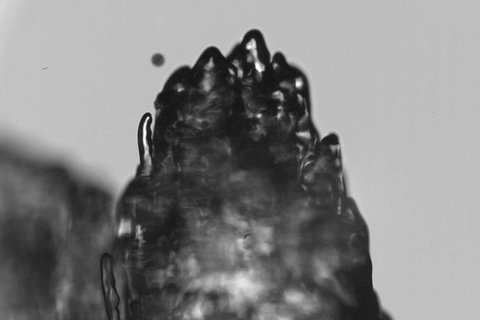
Fig. 3: Airborne supercooled droplets colliding with a sleet grain fixated on a carbon fiber cross (diameter: 1mm) in IDEFIX, taken with a high speed video camera, source: Susan Hartmann/TROPOS.
MORIS - Microphysics Of RIme-Splintering
Lab experiments on secondary ice production
Mixed-phase clouds are essential components of the Earth's weather and climate system. They contain supercooled water droplets and ice particles in a temperature range between 0°C and -38°C (Fig. 1). Primary ice particles are formed via nucleation processes. Above approximately -38°C, this process only takes place when so-called ice nucleating particles (INP) catalyse freezing. In mixed-phase clouds, the observed number concentration of ice particles can exceed that of ice nucleating particles by several orders of magnitude. This discrepancy can be explained by secondary ice production (SIP) processes, which lead to the multiplication of primary ice particles. Examples of SIP processes include the fragmentation of drizzle droplets during freezing, fragmentation through sublimation, or multiplication induced by droplet-ice and ice-ice particle collisions.
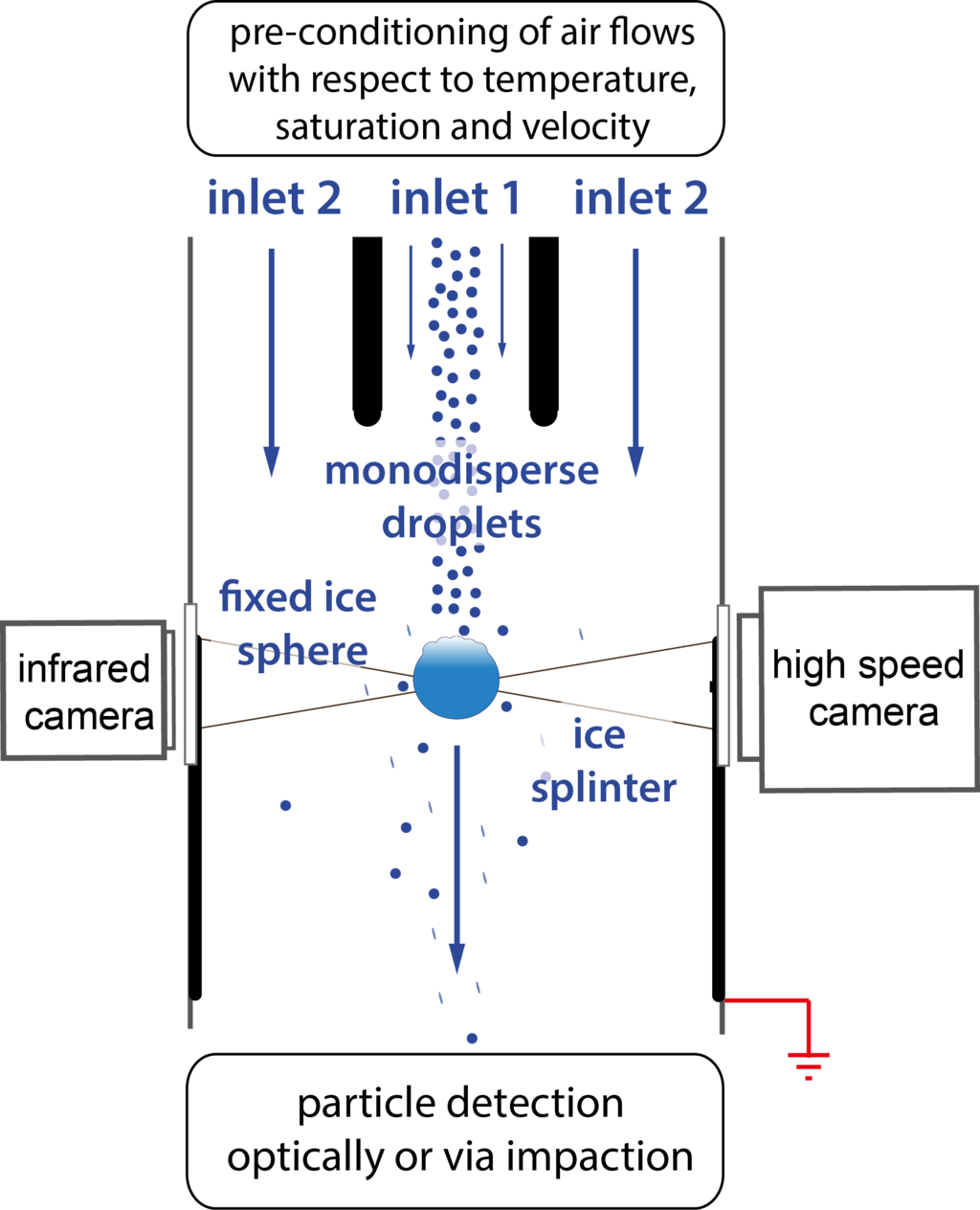
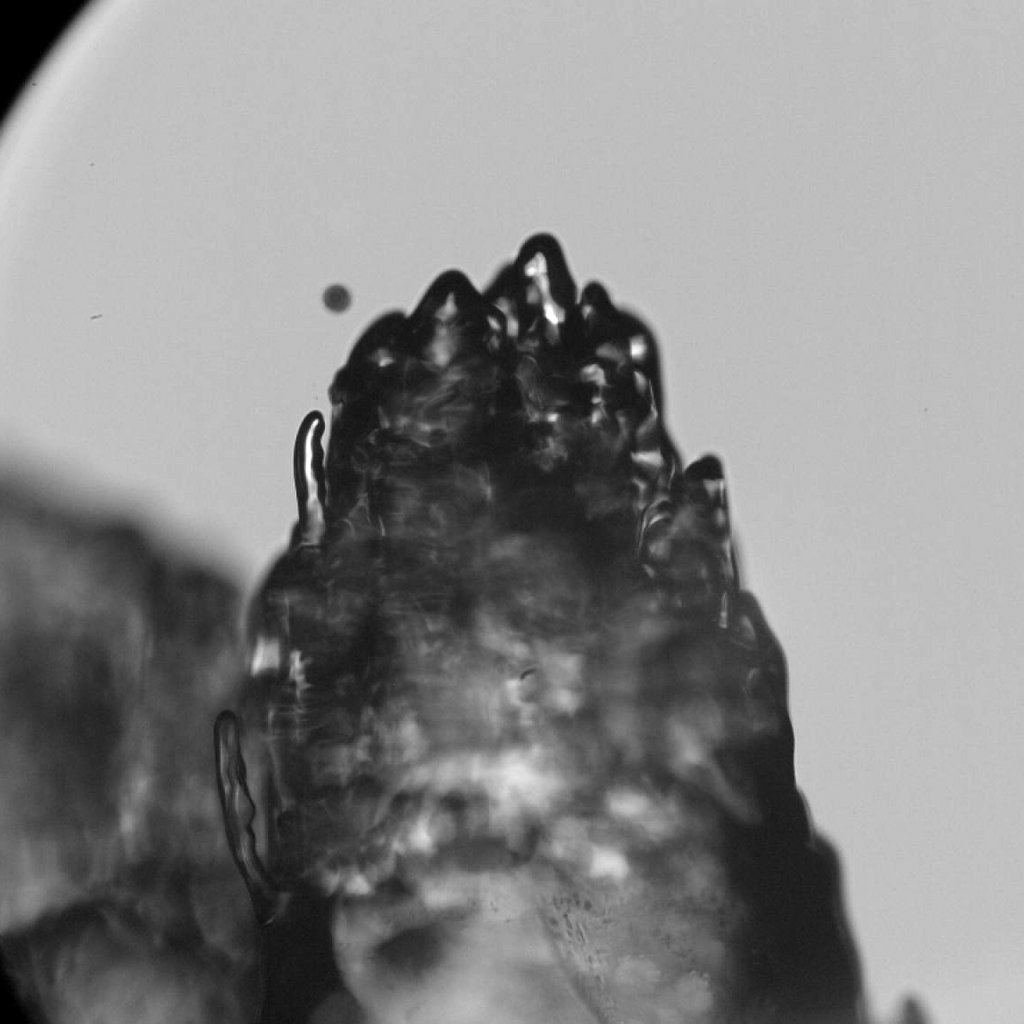
We investigate the SIP process resulting from droplet–ice particle collisions in the laboratory (Fig. 2, IDEFIX, abbreviation for English: “Ice Droplets splintEring on FreezIng eXperiment”). Small, supercooled droplets freeze upon contact with a graupel particle (Fig. 3) on its surface, and under certain conditions secondary ice particles are formed. In general, this SIP process is known as the Hallett–Mossop process or, in English, as the “rime-splintering” process.
Our main objectives are to quantify the secondary ice particles formed and to identify the underlying physical formation mechanisms.
In contrast to earlier experiments (Hallett and Mossop, 1974; summarized in Korolev and Leisner, 2020), in which up to several hundred secondary ice particles per mg of graupel growth at −5°C were observed, Seidel et al. (2024) were hardly able to observe secondary ice formation as a result of rime-splintering. This fundamentally calls into question the rime-splintering process that is often parameterized in models. In Seidel et al. (2024), temperature values of −4 to −10°C, droplet sizes between 10 and 50 µm, and a graupel size of about 1 mm were chosen to simulate near-atmospheric conditions. The detection limit for secondary ice particles was approximately 3 µm in size. Based on the IDEFIX experiments, it could be shown that the formation of secondary ice particles due to thermally induced gradients during freezing can be considered unlikely; freezing of droplets during transient contact with the graupel and spherical freezing of smaller droplets with subsequent fragmentation can be excluded as causes of SIP. Secondary ice particles are formed through sublimation of fine graupel structures, but only in very small numbers.
The aim of the follow-up project MORIS is to better understand and quantify the conditions under which efficient SIP during rime-splintering occurs. In particular, the parameter space for the investigations will be expanded and the influence of the droplet size distribution, ambient pressure, ambient humidity, as well as the rotation of the graupel particle on the production of secondary ice particles will be analyzed in more detail.
The project, funded by the DFG, is carried out in cooperation with the Institute of Meteorology and Climate Research at the Karlsruhe Institute of Technology (KIT).
References:
Hallett, J. and S.C. Mossop, Production of secondary ice particles during riming process, Nature, doi: 10.1038/249026a0, 1974.
Korolev, A., & Leisner, T., Review of experimental studies of secondary ice production, Atmospheric Chemistry and Physics, doi:10.5194/acp-20-11767-2020, 2020.
Seidel, J. S., Kiselev, A. A., Keinert, A., Stratmann, F., Leisner, T., and Hartmann, S., Secondary ice production – no evidence of efficient rime-splintering mechanism, Atmospheric Chemistry and Physics, doi: 10.5194/acp-24-5247-2024, 2024.