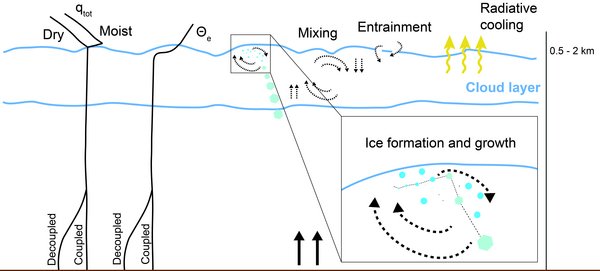
Conceptual model of an Arctic stratiform mixed-phase cloud (from Morrison et al., 2012, DOI: 10.1038/NGEO1332 and modified). The cloud top is at about 0.5 to 2 km. Note that only the most important features are shown in this image.

TINIA - Influence of turbulence on ice crystal formation and diffusional growth by the example of stratiform mixed-phase clouds
The DFG-funded project TINIA aims to improve our fundamental understanding of the physical processes that occur in stratiform mixed-phase clouds (thin layer clouds). This type of cloud is characterized by the simultaneous presence of supercooled cloud droplets and ice crystals and has a major impact on weather and climate. For example, stratiform mixed-phase clouds in the Arctic are considered to play a crucial role in Arctic warming. Although knowledge about this type of cloud has increased significantly in recent decades, the relevant microphysical processes and interactions are still poorly understood and quantified. For example, key questions remain on how, in general, turbulent fluctuations in temperature and saturation influence the formation and diffusional growth of ice crystals and how, in particular, cloud (top) turbulence in stratiform mixed-phase clouds influences these microphysical processes.
Conceptual model of an Arctic stratiform mixed-phase cloud (from Morrison et al., 2012, DOI: 10.1038/NGEO1332 and modified). The cloud top is at about 0.5 to 2 km. Note that only the most important features are shown in this image.
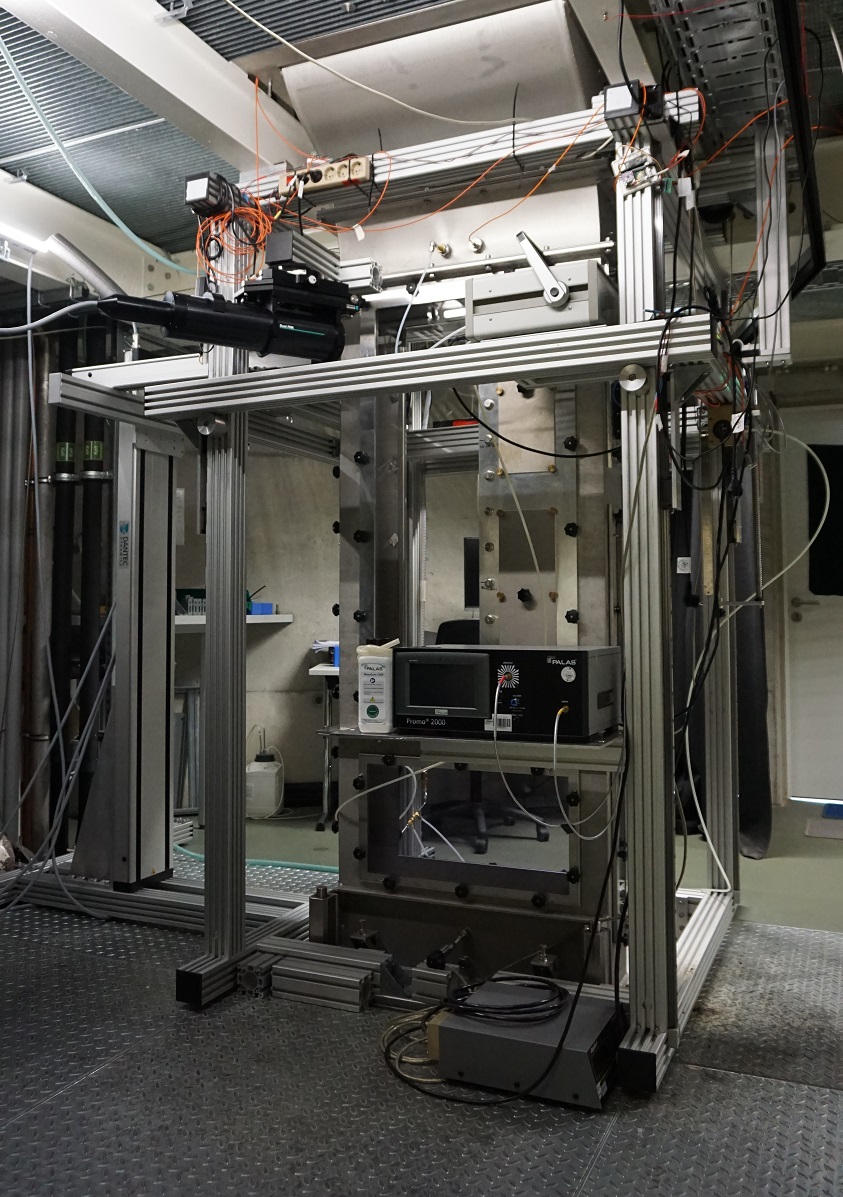
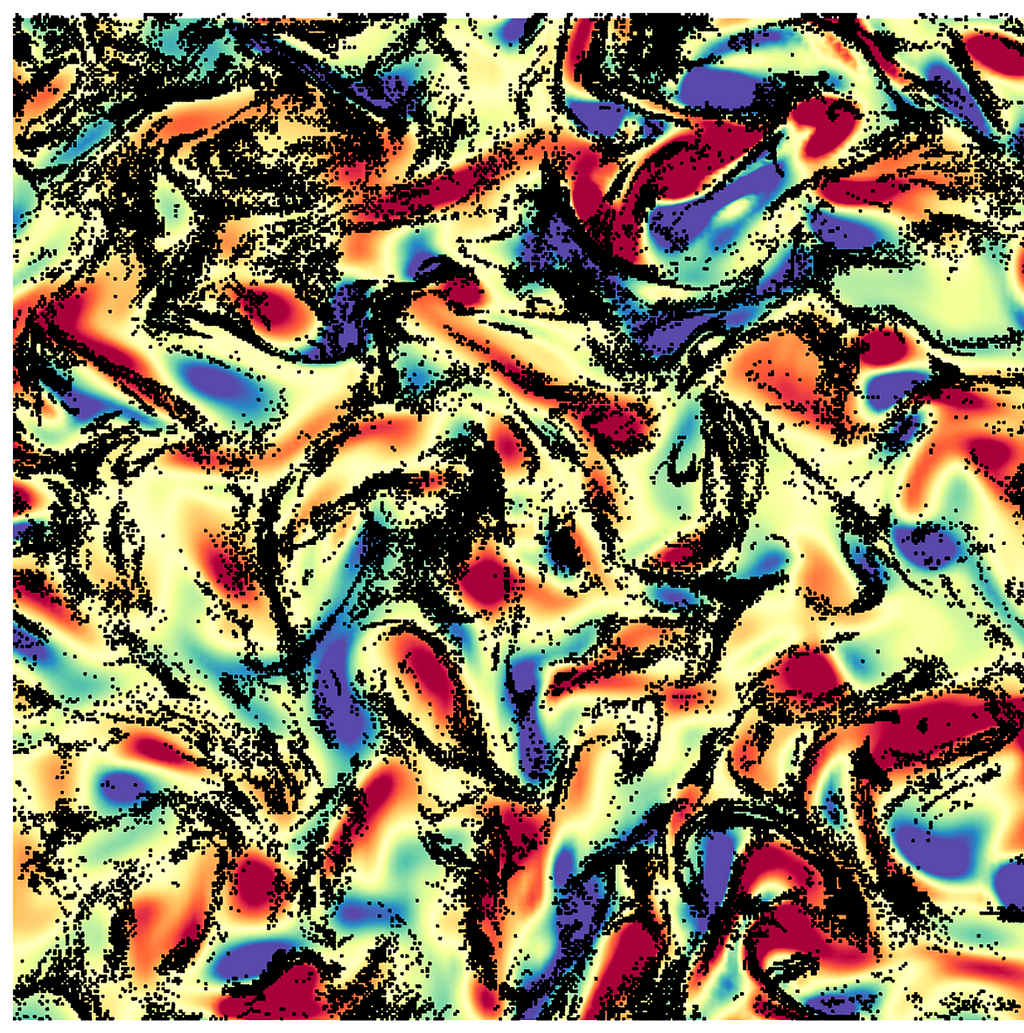
The project uses a combination of laboratory studies, atmospheric observations, and direct numerical simulation to answer these questions.
First results indicate that turbulent temperature fluctuations shift ice crystal formation to higher mean temperatures. This could potentially have a significant impact on the properties and behavior of stratiform mixed-phase clouds, which is now being further investigated in the simulation studies. Overall, the combination of laboratory studies, atmospheric observations and numerical simulation holds great potential for expanding our fundamental understanding of the behavior of stratiform mixed-phase clouds and their role in weather and climate.