Book a Scientist @ Berlin Science Festival (6-8 Nov 26)
From 6 to 8 November, the Leibniz Association will be taking part in the Berlin Science Festival with ‘Book a Scientist’! Our tried-and-tested motto: ‘If you don’t ask, you’ll stay stupid.’
Book a Scientist – Speed dating with science
Haus der Kulturen der Welt (HKW), John-Foster-Dulles-Allee 10, 10557 Berlin
6 November 2026, 3 pm to 6 pm
7 and 8 November 2026, 11 am to 6 pm
You can now book personalised 20-minute appointments with scientists. Do you have any questions? Then come and have a chat with an expert from the Leibniz Association. Choose your favourite topic, book an appointment and, in a one-to-one discussion, ask all the questions you’ve always wanted to know the answers to: What’s behind the longevity hype? Is intermittent fasting just a fad or a real hope? What opportunities and challenges does industrial hemp present? How do plants defend themselves against pests? How do we protect our groundwater? What is the cost of poor air quality? And many more topics.
Here’s how it works: Select an available slot on the website www.leibniz-gemeinschaft.de/scienceweek. The service is free of charge. The sessions take place on site at the festival centre, are open to all age groups, and are held in German and English, with some also available in other languages.
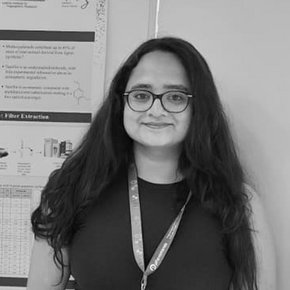
What is inside the smoke from biomass burning and how toxic is it? (EN)
with Mokshika Saxena, Leibniz-Institut für Troposphärenforschung (TROPOS)
Biomass burning releases harmful chemicals which can affect both our health and the climate. My research combines field measurements and laboratory chamber experiments to understand these emissions and change in the atmosphere. I also study how these particles could contribute to oxidative stress in the body. The aim is to understand what is really inside the smoke and how it would affect us.
in Englisch → to book
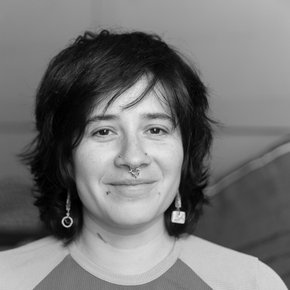
Mineral dust in the atmosphere – what it does and how it looks like? (EN)
with Sofia Gómez Maqueo Anaya, Leibniz-Institut für Troposphärenforschung (TROPOS)
‘Mineral dust’ isn’t one thing, it varies in chemistry, shape and origin, from desert winds to ploughed fields. We traced Saharan dust reaching Cabo Verde, studying what it carries: mining gases, bacteria, fungal spores. Now, here in Germany, we are looking at dust from farms and pig stalls for antibiotic-resistant bacteria, and asking whether it puts us at risk.
in Englisch → to book

What impact does heating with wood and other solid fuels have on air quality? (DE + EN)
with Dr. Nabil Deabji, Leibniz Institute for Tropospheric Research (TROPOS)
Burning wood and other solid fuels provides heat, but also releases particulate matter and harmful gases. How does this affect indoor and outdoor air quality, as well as our health? Together, we will look at the pollutants produced, their effects and practical ways to reduce emissions.
auf deutsch/ in englisch → Buchung / to book
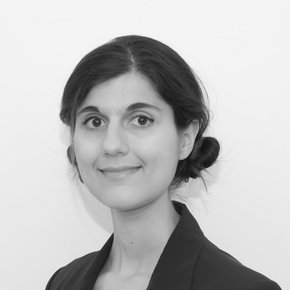
What actually happens to emissions? Atmospheric chemistry: from molecules to particles to climate change (DE + EN)
with Dr. Yarê Baker, TROPOS
What happens to gases and particles once they have been released into the atmosphere? And what kinds of substances actually end up in the air as a result of natural processes or human activity? Countless reactions take place in the atmosphere that transform and break down substances, alter particle concentrations and influence the climate and weather. The role that trees play in this, or what happens to smoke, are just two fascinating questions we’d be happy to discuss.
auf Deutsch / in English → Buchung / to book
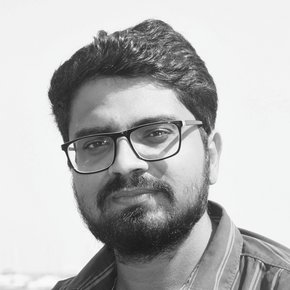
Micro- and nano- plastics in urban air (EN)
with Ankush Kaushik, TROPOS
Air-quality monitoring routinely measures particulate matter, but rarely determines how much plastic these airborne particles contain. Measuring plastics in the air is challenging because they have different chemical compositions and occur across a broad range of particle sizes. We analysed common types of plastic in Leipzig’s urban air and found that tyre wear was a major contributor. This raises important questions about the sources of airborne plastics, human exposure, and their potential effects on health and the urban environment.
in English → to book