Properties of cloud condensation nuclei, ice nucleating particles, and cloud particle residuals in and around clouds of the Southern Ocean (HALO 2024, HALO-South)
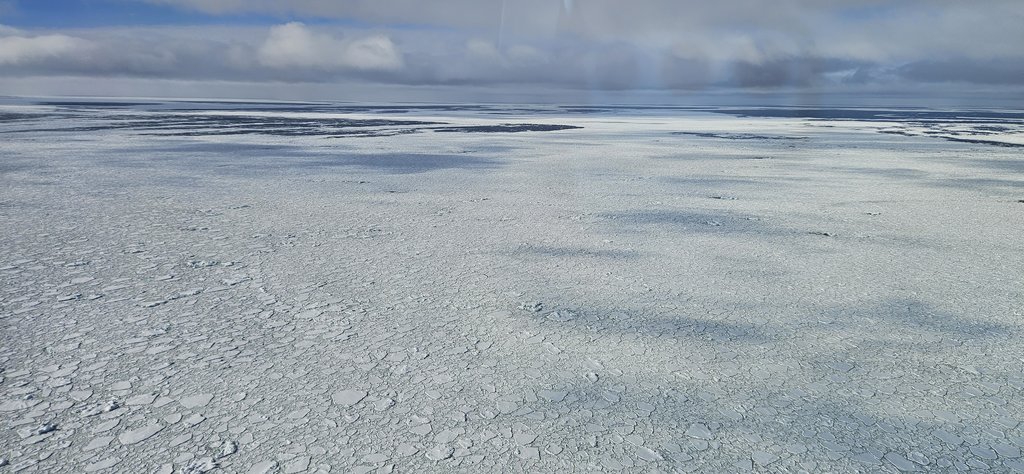
The Southern Hemisphere (SH), and in particular the Southern Ocean (SO), are regions of the Earth that remain insufficiently explored with regard to atmospheric and especially cloud-related properties. Moreover, models such as general circulation models (GCMs) are unable to accurately represent cloud cover, cloud phase, and atmospheric aerosols over the SO, although these are key parameters for assessing the impacts of anthropogenic aerosols and cloud feedbacks on climate.
Compared to models, satellite observations indicate higher fractions of supercooled liquid water in clouds in the SH, especially over the SO. This leads to a radiation bias and consequently to errors in models that calculate the radiation budget of the Earth–atmosphere system. Aerosol particles in general, and cloud condensation nuclei (CCN) and ice-nucleating particles (INP) in particular, influence cloud formation and glaciation, thereby affecting the microphysical and radiative properties of clouds.
Although information on aerosol properties as well as indications and hypotheses about possible sources over the Southern Ocean exist, both the available data and the quantitative understanding of the underlying processes remain insufficient to adequately constrain, evaluate, and—most importantly—improve atmospheric models for the SO region.
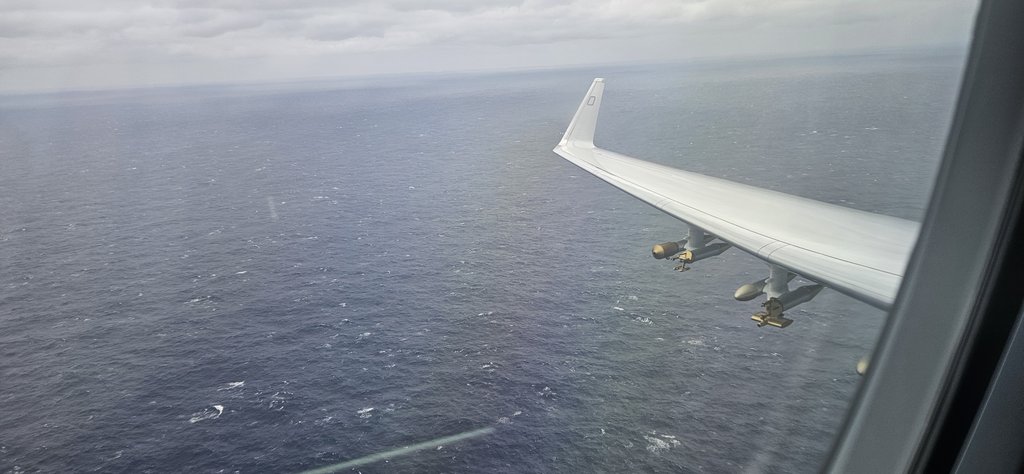
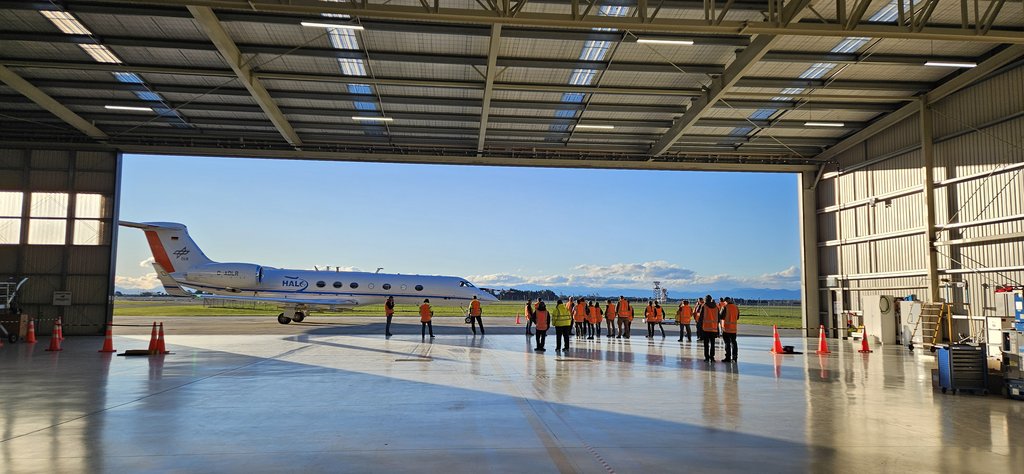
To address these knowledge gaps, measurements were conducted in November 2025 as part of the HALO-South mission using the HALO research aircraft over the Southern Ocean. The objective was the combined investigation of the properties of CCN, INP, and cloud particle residuals, along with a detailed analysis of their respective origins and sources. Despite existing knowledge of potential aerosol sources, the available data and process understanding were still not sufficient to reliably constrain, evaluate, and improve atmospheric models for the SO region.
During the project, a suite of instruments was deployed, including a miniaturized cloud condensation nuclei counter (mCCNc), an aerosol particle filter sampler (HERA), and a counterflow virtual impactor (HALO-CVI), to gain new insights into the properties and effects of atmospheric aerosol particles. The collected data are currently being analyzed.