
Team Aerosol-Cloud-Interactions (Picture: Richard Wohlfarth)

Team Aerosol-Cloud-Interactions (Picture: Richard Wohlfarth)
The Aerosol–Cloud Interactions team, led by Dr. Silvia Henning, investigates how aerosol particles influence the formation, development, and properties of clouds. A particular focus is on cloud condensation nuclei (CCN) and ice-nucleating particles (INP).
CCN enable the formation of cloud droplets by binding water vapor already at low supersaturation. Their number, chemical composition, and size determine how many droplets form and how large they become. These factors are crucial for the radiative properties of clouds and influence whether and when precipitation occurs.
INP promote the freezing of cloud droplets by lowering the energy barrier for ice formation. Depending on the nature of the particles, this process can begin at temperatures just below 0 °C or only occur at much lower temperatures. In the laboratory, we investigate which aerosol particles trigger freezing, how ice particles continue to grow, and which mechanisms lead to a multiplication of ice particles.
In addition to laboratory studies, we conduct worldwide measurements to determine the concentration and origin of CCN and INP. Furthermore, we collect ice particles from real clouds in order to analyze their composition and draw conclusions about their formation. Our research contributes to a better understanding of cloud processes and to a more precise description of their role in the climate system.
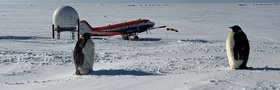
Within SANAT, the physical and chemical properties of aerosol particles, as well as turbulent processes in the polar boundary layer and the lower free troposphere over Antarctica, are investigated.

HALO South explores atmospheric regions far removed from established observation networks using the research aircraft HALO. The mission enables new insights into the composition, dynamics, and radiative effects of the atmosphere over the Southern Hemisphere.
Our project investigates the properties of CCN, INP, and cloud particle residuals (CPR) over the Southern Ocean, based on measurements from the November 2025 HALO-South mission, to improve understanding of their role in climate and reduce model uncertainties.
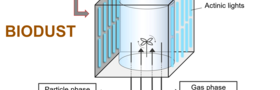
The Chamber-BIODUST project investigates the interactions between biomass burning aerosols and mineral dust to better understand their impact on climate, cloud formation, and atmospheric processes. The experimental results provide key insights for improving climate models and enabling a more accurate assessment of the effects of wildfire emissions on the atmosphere.
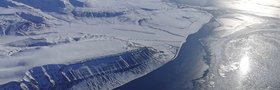
This research project investigates the Arctic amplification in climate change and analyzes processes, feedback loops, and their global impacts, with a particular focus on aerosol-cloud interactions. Field measurements, such as the BACSAM aircraft campaigns, are used to study and quantify CCN, INP, and turbulent aerosol fluxes in the Arctic atmosphere.
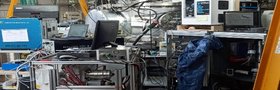
The ORACLE project investigates how organic aerosols influence cloud formation, particularly by affecting particle hygroscopic growth and CCN activity. The findings enhance the understanding of aerosol–cloud interactions and contribute to more accurate modeling of climate processes and precipitation formation.

CLOUD-DOC is a European research and training network of 12 PhD students investigating how aerosol nucleation influences the atmosphere, clouds, and climate through advanced experiments in the CERN CLOUD chamber.
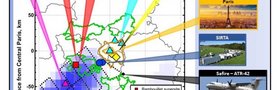
The ACROSS project explores the interactions between urban emissions and biogenic compounds to better understand the formation and evolution of air pollution in suburban environments. The results provide key insights into aerosol aging, hygroscopicity, and cloud activation potential, thereby improving air quality modeling and the understanding of atmospheric processes.

CleanCloud focuses on the question of how natural aerosol processes and their interaction with clouds will develop in the post-fossil age.
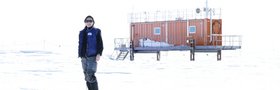
VACCINE unravels the role of aerosols and clouds in the Antarctic climate system through unique long-term CCN and INP measurements. This project delivers new, data-driven insights into the processes that control cloud formation and climate in polar regions.

The CIRRUS-HL project investigates the formation and climate impact of ice clouds, as well as the influence of aviation on cirrus clouds, using the HALO research aircraft. Advanced instrumentation and cloud sampling techniques enable detailed analysis of aerosol particles, ice residuals, and black carbon across different cloud types. The results provide key insights into aviation emissions and cloud processes, helping to improve climate model accuracy.