
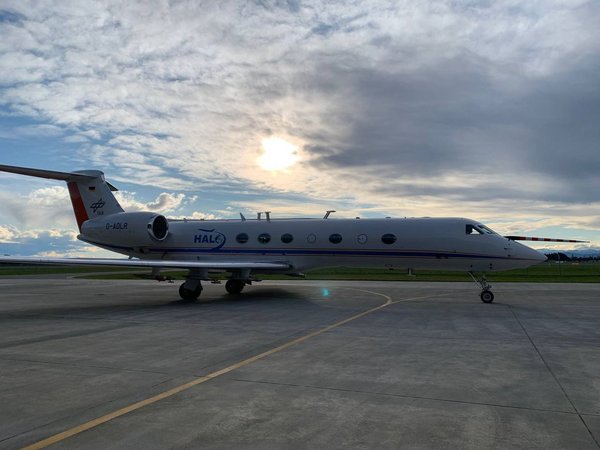
To understand the role of atmospheric aerosols in cloud formation and climate, we need detailed information about their sources, abundance, and physicochemical properties in different atmospheric layers. Aerosol nucleation and subsequent particle growth processes in the upper troposphere and lower stratosphere (UTLS) are particularly poorly understood. Addressing these gaps requires in situ observations in regions characterized by strong, persistent convection. The Indo-Pacific Warm Pool, known for its high sea surface temperatures and frequent deep convective events, is one such region. During the CAFE-PACIFIC campaign in January and February of 2024, comprehensive aerosol measurements were conducted in the Indo-Pacific region, both to the northwest and northeast of Cairns, Australia. Aerosol size distributions ranging from 2 nm to 5 μm were measured using the Fast Aerosol Size Distribution (FASD) instrument, along with cloud condensation nuclei (CCN) number concentrations. These observations allow for an assessment of particle growth into CCN-relevant size ranges, which is a main focus of the ongoing data analysis.