
Team Particle Formation and Mixing (Picture: Hannes Vogel)

Team Particle Formation and Mixing (Picture: Hannes Vogel)
The New Particle Formation, led by Dr. Birgit Wehner, investigates the formation of tiny aerosol particles from precursor gases of natural origin and their transport. This phenomenon can be observed in a wide variety of environments, such as the Arctic, marine boundary layers, and in the vicinity of clouds. The second focus is on the vertical transport of newly formed particles and their exchange at interfaces, such as the ocean-atmosphere interface. The aim of our research is to quantify the influence of individual particle sources on the aerosol budget in different regions and to estimate how effective the vertical exchange of particles is and what role they can play in cloud formation. In addition to ground-based measurement methods, a variety of flying platforms are used, such as uncrewed aerial systems (UAS), tethered balloons, a helicopter-borne platform as well as the research aircraft HALO.
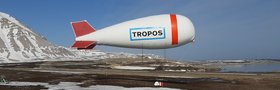
Aerosol variability and interaction with environmental conditions based on small-scale vertical and horizontal distribution in measurements in the Arctic (AIDA)
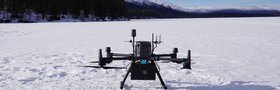
The project Air-Q-Drone is developing a new type of drone that can measure the vertical and horizontal distribution of PM10, PM2.5, and PM1, as well as the number concentration of ultrafine particles.
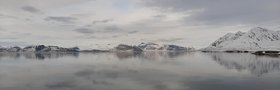
The project uses measurements from a Polarstern expedition to investigate vertical aerosol fluxes in the marine Arctic in order to understand the influence of black carbon and INPs on Arctic amplification and cloud processes.
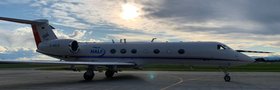
CAFE-PACIFIC is a measurement campaign employing the German high-altitude research aircraft HALO to investigate photochemical processes and aerosol formation in the tropical troposphere over the Pacific region
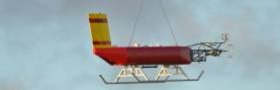
The project CAINA investigates how nitrogen compounds alter cloud microphysics. The project combines laboratory and field measurements with modeling.
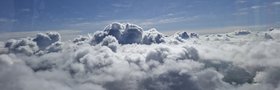
CAINA-NAT focuses on the question of whether new particle formation occurs at cloud edges and how aerosol-cloud interactions are influenced.