
Aerosol variability and interaction with ambient conditions based on small-scale vertical and horizontal distribution of Arctic measurements (AIDA)
In the relatively clean Arctic, new particle formation (NPF) in spring and summer is an important source of aerosol particles. Aerosol concentrations in the Arctic exhibit strong seasonal variations, with peak values for ultrafine particles often associated with open water and melting conditions. To better understand these processes of new formation and the occurrence of small particles, observations of vertical particle distribution are essential. However, vertical measurements of small particles (< 20 nm) in the Arctic remain limited.
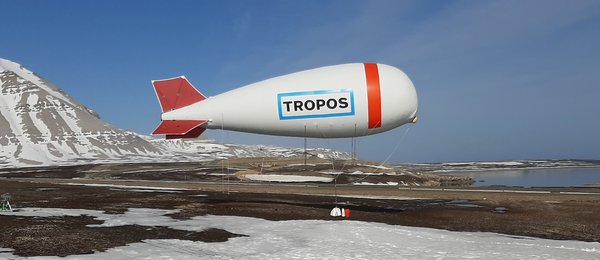
To close this gap, measurements were carried out in spring 2024 in Ny-Ålesund, Svalbard, using the BELUGA tethered balloon system. They cover the transition to the melt season with rising temperatures and decreasing snow cover. The profiles show changing vertical patterns that indicate increasing UFP concentrations near the ground as snow melt progresses.