Aerosols and Clouds in polluted regions grow faster
Leipzig,
20.05.2026
– Tilo Arnhold
Researchers have found a possible explanation for the slower rate of global warming in Asia and Africa.
Leipzig. Aerosols and clouds play a key role in the Earth’s climate budget. However, the extent to which they reflect solar energy depends heavily on how much water the particles can absorb. This so-called hygroscopicity has so far been represented in a simplified manner in climate models. An international research team led by the Leibniz Institute for Tropospheric Research (TROPOS) has now demonstrated through a global study that the models are not precise enough, particularly in urban regions. In chemically complex and polluted regions such as Delhi or Cairo, there is likely to be greater hygroscopic growth and higher water uptake, which could partly explain the observed regional cooling trends or the slower warming on the Asian and African continents, the researchers write in the journal Communications Earth & Environment, published by the Nature Publishing Group.
Particles in the atmosphere have a significant impact on the Earth’s radiation balance: on the one hand, these aerosols directly reflect sunlight and thermal radiation. On the other hand, they also act as cloud condensation nuclei. The amount of water vapour that adheres to the particles has a major effect on cloud formation. The hygroscopicity of aerosols (κ) is one of the key parameters in calculations of radiative forcing and influences the uncertainties in climate projections. Although cloud condensation nuclei have been studied for a long time, the hygroscopic growth of aerosols at sub-saturated conditions remain poorly characterised, particularly in remote and pristine regions.
To address these gaps in knowledge, the researchers developed a method using explainable machine learning (ML) to estimate the size-dependent κ in various atmospheric environments, incorporating observations from ten sites and across several particle sizes ranging from 50 to 300 nanometres. By integrating chemical composition, particle number size distribution and meteorology, the complexity of aerosol mixing states could be captured whilst simultaneously enabling the imputation of data gaps. “Unlike previous regional ML studies, our approach was extended and evaluated using geographically diverse and regionally resolved datasets, thereby improving predictive accuracy and interpretability,” explains Shravan Deshmukh from TROPOS. Machine learning allowed more data to be analysed than usual, and a wide range was covered through a diverse array of measurements. Hygroscopicity measurements using Hygroscopicity Tandem Differential Mobility Analysers (HTDMA) at ground stations span several continents and over a decade: Beijing (China, 2016/17), Cairo (Egypt, 2019/20), Delhi (India, 2020), Goldlauter (Germany, 2010), Henties Bay (Namibia, 2017), Houston (USA, 2021/22), Mahabaleshwar (India, 2020), Melpitz (Germany, 2015), Paris (France, 2022) and the Atlantic (R/V Polarstern, 2011/12).
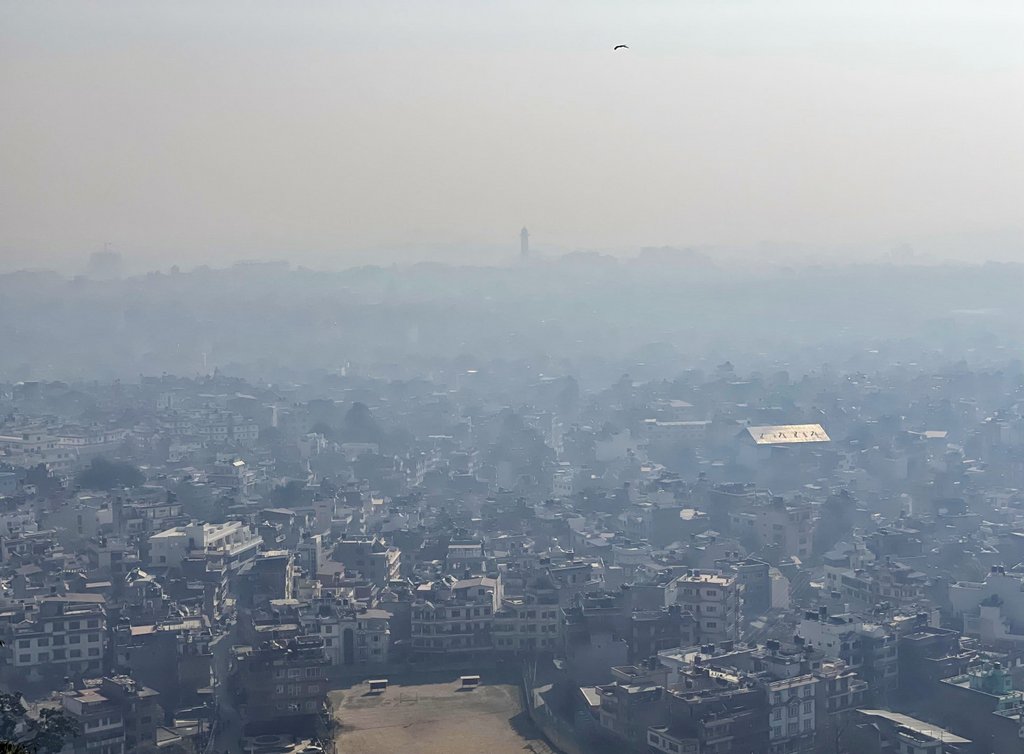
A significant influence of externally mixed particles on κ was observed, particularly in urban and populated areas where new emissions interact with aged aerosols. “In heavily polluted regions such as megacities in Egypt or India, the particles are likely to grow faster and absorb more water. This could explain why these regions warm up less quickly. Increased hygroscopic growth in such regions also has potential implications for public health due to smog, as we were able to demonstrate through drone measurements in Delhi,” explains Dr Ajit Ahlawat, Assistant Professor at TU Delft. In such areas, conventional models exhibit the greatest errors, as they assume ideal internal mixing and disregard size and source variabilities. This underscores the importance of the chemical composition of the particles. As early as 2023, the team was able to show that, on a global average, hygroscopicity is essentially determined by the proportion of organic and inorganic substances in the aerosol composition.
Building on previous work, our regional estimates provide an improved, data-driven representation of aerosol hygroscopicity. This approach leads to more accurate estimates of negative radiative forcing and offers an alternative to conventional uniform parameterisations,” emphasises Prof. Mira Pöhlker of TROPOS and the University of Leipzig. “Our results highlight the importance of region-specific aerosol parameterisations as a crucial step towards reducing uncertainties in the estimation of direct radiative forcing in next-generation climate models. The use of estimates such as ours can typically alter regional direct radiative forcing by up to ±0.1 watts per square metre, which would be significant on a global scale.” The researchers, therefore, now hope that their new algorithm will be integrated into global models, which could potentially alter both the magnitude and the sign of aerosol-radiation interactions. This could make future climate models more accurate. Tilo Arnhold
Publication:
Deshmukh, S., Ferrer-Cid, P., Romshoo, B. et al. Regional aerosol hygroscopicity influences radiative forcing globally. Commun Earth Environ (2026). https://doi.org/10.1038/s43247-026-03505-z
This research was funded by the Agency for the Management of University and Research Grants (AGAUR, Spain; PID2022-138155OB-I00 and MCIN/AEI/10.13039/501100011033 through the ERDF ‘A way of making Europe’; grant numbers 2021SGR-01059 and AGAUR 2023 CLIMA 0097); the RECLAIM Network Plus (EP/W034034/1), the French National Research Agency (ANR; grant number ANR-15-CE01-0014-01), the French national programme LEFE/INSU, the Programme national de Télédetection Spatiale (PNTS, grant number PNTS-2016-14), the French National Space Research Agency (CNES), the South African National Research Foundation (NRF; grant reference UID 105958), the Institut National des Sciences de l’Univers of the Centre national de la recherche scientifique (CNRS INSU; ACTRIS-FR infrastructure); the US Department of Energy, Office of Science, Division of Biological and Environmental Research (grant number DE-SC0021074), the European Union’s ‘Horizon 2020’ research and innovation programme (grant agreement No. 856612 (EMME-CARE)), and the German Research Foundation (DFG) (grant number WE 2757/4-1). Open Access funding was made possible and organised by the DEAL project.
Institutions involved:
Leibniz Institute for Tropospheric Research (TROPOS), Leipzig, Germany
Universitat Politècnica de Catalunya (UPC), Barcelona, Spain.
The Cyprus Institute, Nicosia, Cyprus.
Centre National des Recherches Météorologiques (CNRM), Toulouse, France.
Aix-Marseille Université, Marseille, France
Université Paris Cité and Univ Paris Est Créteil, Paris, France.
Indian Institute of Tropical Meteorology, Pune, India.
Indian Institute for Technology New Delhi (IIT-D), New Delhi, India.
University of Surrey, Guildford, United Kingdom.
Jinan University, Guangzhou, China.
Peking University, Beijing 100871, China.
Spanish Ministry for Ecological Transition; Madrid, Spain.
Spanish Research Council (IDAEA-CSIC), Barcelona, Spain.
University of California Riverside, Riverside, CA, USA.
Delft University of Technology (TU Delft), Delft, The Netherlands.
Leipzig University, Leipzig, Germany.
Contacts:
Prof. Mira Pöhlker
Head of the Atmospheric Microphysics Department, Leibniz Institute for Tropospheric Research (TROPOS), Leipzig, and Leipzig University, Germany
Tel. +49-341-2717- 7445
https://www.tropos.de/en/institute/about-us/employees/mira-poehlker
and
Shravan Deshmukh
Atmospheric Microphysics Department, Leibniz Institute for Tropospheric Research (TROPOS), Leipzig, Germany
Tel. +49-341-2717- 7435
https://www.tropos.de/en/institute/departments/experimental-aerosol-and-cloud-microphysics
and
Dr. Ajit Ahlawat
Assistant Professor, Civil Engineering & Geosciences, Atmospheric Remote Sensing, Delft University of Technology (TU Delft)
Tel. +31631168405
https://www.tudelft.nl/staff/a.s.ahlawat/
or
Tilo Arnhold
Public Relations, TROPOS
Tel. +49-341-2717-7189
https://www.tropos.de/en/current-issues/press-releases
Links:
Behind the paper: Regional aerosol hygroscopicity influences radiative forcing globally. Blog in Springer Nature: https://go.nature.com/4cyXzPn
India is a global warming ‘hole,’ and scientists aren’t sure why. Despite its extreme heat waves, the country’s decadeslong warming trend amounts to half the global average (SCIENCE, 8 Apr 2025): https://www.science.org/content/article/india-global-warming-hole-scientists-arent-sure
Effect of aerosol particles on clouds and the climate captured better (Press release, 21 Nov 2023): https://www.tropos.de/en/current-issues/press-releases/details/auswirkung-von-aerosolpartikeln-auf-wolken-und-klima-besser-erfasst
Drones equipped with cost-effective sensors can help to monitor air quality more effectively (Press release, 13 Feb 2026): https://www.tropos.de/en/current-issues/press-releases/details/drohnen-mit-preiswerten-sensoren-koennen-helfen-die-luftqualitaet-besser-zu-ueberwachen
TROPOS team “Radiation Effects”: https://www.tropos.de/en/institute/departments/experimental-aerosol-and-cloud-microphysics/strahlungseffekte
TROPOS team “Particle Formation and Mixing”: https://www.tropos.de/en/institute/departments/experimental-aerosol-and-cloud-microphysics/aerosolquellen-und-transport
TROPOS team “Aerosol Cloud Interaction”: https://www.tropos.de/en/institute/departments/experimental-aerosol-and-cloud-microphysics/aerosol-wolken-wechselwirkungen
ACROSS Project (Atmospheric Chemistry of the Suburban Forest): https://www.tropos.de/en/institute/departments/experimental-aerosol-and-cloud-microphysics/aerosol-wolken-wechselwirkungen/across
The Leibniz Institute for Tropospheric Research (TROPOS) is a member of the Leibniz Association, which connects 96 independent research institutions. Their focus ranges from the natural sciences, engineering and environmental sciences to economics, spatial and social sciences and the humanities. Leibniz Institutes address socially, economically and ecologically relevant issues.
They conduct knowledge- and application-oriented research, including in the overarching Leibniz Research Alliances, are or maintain scientific infrastructures and offer research-based services. The Leibniz Association focuses on knowledge transfer, especially with the Leibniz Research Museums. It advises and informs politics, science, industry and the public.
Leibniz institutions maintain close cooperation with universities – including in the form of Leibniz Science Campuses – with industry and other partners in Germany and abroad. They are subject to a transparent and independent evaluation process. Due to their national significance, the federal and state governments jointly fund the institutes of the Leibniz Association. The Leibniz Institutes employ around 21,400 people, including 12,170 scientists.
The total funding volume is 2.3 billion euros. They are jointly financed by the federal and state governments. The basic funding for the Leibniz Institute for Tropospheric Research (TROPOS) is provided by the Federal Ministry of Research, Technology and Space (BMFTR) and the Saxon State Ministry of Science and the Arts (SMWK). The institute is co-financed from tax revenues on the basis of the budget approved by the Saxon State Parliament.
http://www.leibniz-gemeinschaft.de
https://www.bmbf.de/
https://www.smwk.sachsen.de/