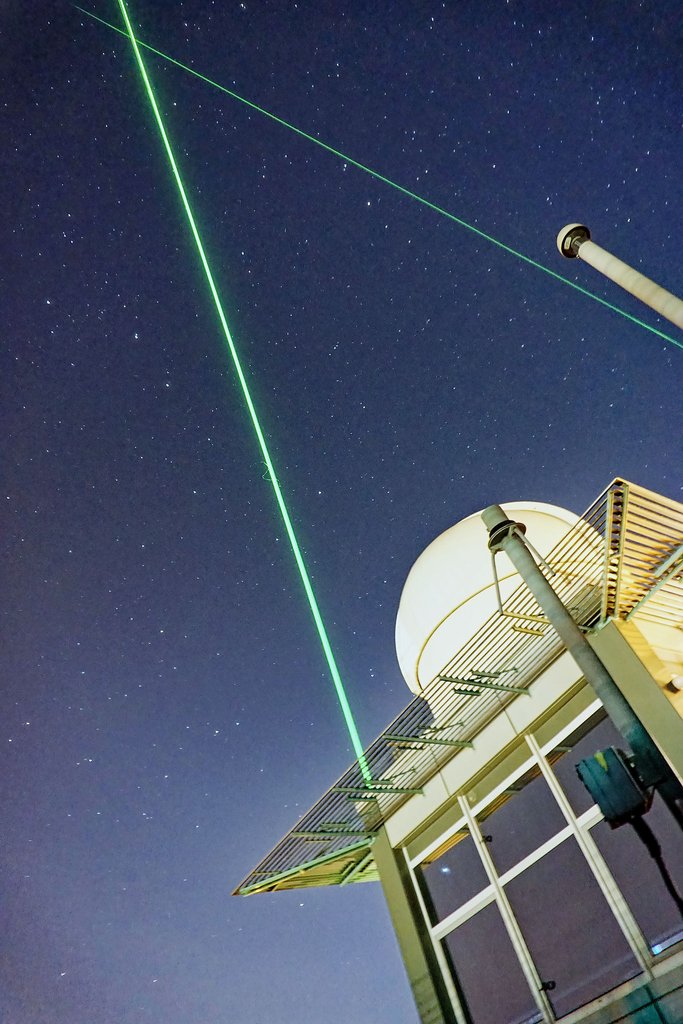
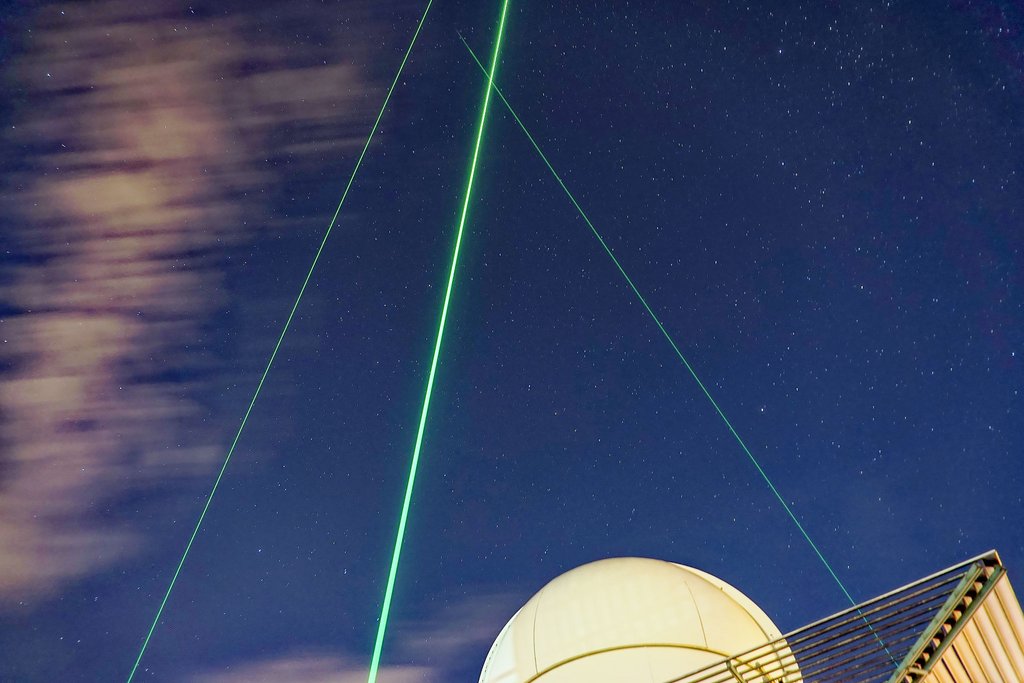
Smoke from the fire clouds over Bordeaux at high altitude above Leipzig
Leipzig,
05.08.2026
Smoke particles spread over a wide area and affect the global climate
Leipzig. The images of the major forest fires in Spain and France, with the fire clouds near Bordeaux, have shocked many people. There have been numerous reports of the formation of a pyrocumulonimbus cloud – a fire-driven thundercloud – and the possible transport of smoke particles to Central Europe. Researchers at the Leibniz Institute for Tropospheric Research (TROPOS) have now demonstrated that smoke particles from the severe forest fires in southern Europe were indeed transported to Germany at various altitudes: During the nights from Tuesday to Thursday (28 to 30 July 2026), they observed smoke layers over Leipzig at an altitude of 10–11 kilometres from midnight onwards – an unusually high altitude for European fires. The origin of the air masses could be traced using backward trajectories: the air masses over Leipzig had been over the fire area near Bordeaux around 15 hours earlier. For the researchers, the lidar measurements provide strong evidence that the forest fires near Bordeaux did indeed result in high-reaching pyroconvection and the transport of smoke particles as far as the upper troposphere.
Up-to-date background information on the topic of ‘Forest fire aerosols in Europe: dispersion, climate and health’ is now also provided in a dossier by the Science Media Center Germany (SMC), to which five researchers from TROPOS and the Leibniz Science Campus ‘Smoke and Bioaerosols in a Changing Climate‘ (LSC BioSmoke) have contributed.
Aerosol particles influence the Earth’s energy balance and water cycle: they scatter and absorb incoming solar radiation, thereby affecting the global energy balance. By acting as cloud condensation nuclei or ice nuclei, these particles can influence the microphysical properties of clouds, making them appear more or less bright. Whether cloud droplets remain liquid or freeze also alters the climate impact of that cloud. That is why researchers from Leipzig at TROPOS, the Leipzig University and the DBFZ are collaborating within the Leibniz Science Campus ‘BioSmoke’ to investigate the influence of smoke particles on the climate. Their work involves, amongst other things, atmospheric modelling, laboratory experiments and measurements using laser equipment (lidar). For many years now, the remote sensing experts at TROPOS have been studying the atmosphere from the ground: to do this, they use a lidar system that emits laser pulses from the ground into the atmosphere above and analyses the reflected light. Since 2022, it has been possible to use fluorescence measurements to distinguish biogenic smoke particles originating from wildfires from atmospheric particles originating from other sources, such as volcanoes. In recent years, they have already been able to identify smoke from major wildfires in Canada over Leipzig.
The latest measurements now show a similar picture: “The temporal evolution of the measured fluorescence backscatter identifies layers of smoke at altitudes of 3 to 7 and 10 to 11 kilometres. Back-trajectories for the start time of 28 July at 23:00 CEST over Leipzig show that the air masses in which these smoke layers were detected had been over the forest fire area near Bordeaux approximately 15 hours earlier and near fires in central Spain approximately 24 hours earlier. It therefore stands to reason that the smoke particles measured by the lidar originate from these fires in France and/or Spain,” reports Benedikt Gast from TROPOS, who is investigating the atmospheric transport of wildfire smoke using fluorescence lidar as part of his PhD project. What is unusual about the current measurements is the high altitude of the smoke layers – in 10–11 km height close to the tropopause. In the past, smoke layers at such altitudes have only been observed over Leipzig from very severe forest fires in North America. This fact underlines the large scale of the fires by European standards and suggests that high-altitude pyroconvection occurred.
“However, the extent to which the smoke measured over Leipzig can be attributed to a single pyrocumulonimbus event remains to be clarified. During the forest fires near Bordeaux, a convective cloud was indeed observed on the afternoon of 25 July that could certainly be classified as a PyroCb – an event that is, at the very least, extremely rare in Central Europe. However, it formed in the context of a synoptic-scale front, meaning that conventionally triggered deep convection also occurred in the immediate vicinity of the PyroCb. This, too, makes vertical smoke transport possible, for example,” explains Jason Müller from TROPOS, who is modelling the formation of PyroCb events in his PhD work.
For smoke to rise to high altitudes, even into the stratosphere, and be widely dispersed there, either long periods are required during which the smoke is heated by the sun and rises slowly, or fire-induced thunderclouds transport the smoke rapidly upward, as if in a lift. Smaller fires do not exhibit these dynamics: Their smoke does not reach such heights and is therefore often quickly washed out by rain in the lower layers of the atmosphere. As with volcanic eruptions, altitude is also crucial in the case of wildfires: if the particles and gases only reach altitudes below 10 kilometres (the troposphere), the effects on the affected region may be devastating, but their impact on the global climate is limited. If, on the other hand, the particles and gases reach altitudes above 10 kilometres, they can remain in the stratosphere for a long time and are carried by the upper-level winds far across the respective hemisphere.
“Depending on their composition, chemical ageing, and their interaction with clouds, the particles can either weaken or amplify incoming solar radiation. These relationships have not yet been sufficiently researched, but they pose major challenges for climate research. They are of particular significance in view of the increasingly severe forest fires expected in a warming climate,” summarises Prof. Ina Tegen from TROPOS and the University of Leipzig. She is also the spokesperson for the Leibniz ScienceCampus “Smoke and Bioaerosols in a Changing Climate” (LSC BioSmoke).
“Extreme wildfires involving pyrocumulonimbus clouds pose new challenges, particularly for aerosol-climate research. They can transport smoke particles and trace gases as far as the upper troposphere or lower stratosphere, where they can influence radiative processes and the formation of ice clouds. These processes are not yet fully understood and have so far only been represented to a limited extent in global aerosol-climate models,” Dr Bernd Heinold from TROPOS, who has studied these pyrocumulonimbus clouds in Australia using atmospheric models, told the SMC.
“Another important aspect is how wildfire aerosols change after they are emitted. This is because, in addition to the transport, a multitude of chemical reactions and physical processes take place in our atmosphere – the emissions ‘age’, so to speak. How this affects their toxicity and their impact on weather and climate is a highly topical area of research, in which many questions remain unanswered and which we at TROPOS are investigating as part of the LSC BioSmoke,” emphasised Dr Yarê Baker from TROPOS to the SMC.
“Forest fire aerosols have a wide range of effects on weather and climate. Smoke particles scatter and absorb incoming solar radiation, which, depending on the thickness of the smoke layer, can reduce the temperature at the ground by several degrees. Furthermore, soot particles act as so-called cloud nuclei and can promote the formation of high, thin ice clouds. These clouds further reduce solar radiation at the ground level; however, they also trap long-wave radiation from the Earth and are thought to have a warming effect on the climate. At the same time, the soot produced during the combustion warms the atmosphere by absorbing solar radiation. This warming is in addition to the warming effect of the greenhouse gas emissions from the fires. Consequently, in the long term, emissions from forest fires are more likely to be associated with a further increase in global warming,” reports Dr Robert Wagner, coordinator of the LSC BioSmoke.
Even though the total quantities of smoke particles are relatively low, in the otherwise fairly clean upper troposphere, at an altitude of around 10 km, they can influence the climate in various ways: on the one hand, the soot particles reflect a part of the incoming sunlight; on the other hand, they also absorb some of it, thereby heating themselves and the surrounding atmospheric layers. They also promote the formation of high-level ice clouds, which tend to have a warming effect on the climate. Atmospheric researchers are therefore currently discussing the extent to which forest fires are now influencing the global climate and whether smoke from forest fires could be a factor accelerating global warming. Tilo Arnhold
Dossier:
Forest fire aerosols in Europe: spread, climate and health (SMC, 31 July 2026): https://www.sciencemediacenter.de/angebote/waldbrand-aerosole-in-europa-ausbreitung-klima-und-gesundheit-26192
Media contacts:
Prof. Ina Tegen
Spokesperson of the Leibniz ScienceCampus ‚Smoke and Bioaerosols in a Changing Climate‘ (LSC BioSmoke) and Head of the Department Modelling of Atmospheric Processes, Leibniz Institute for Tropospheric Research (TROPOS), Leipzig, and the Leipzig University
Tel. +49 341 2717-7041
https://www.tropos.de/institut/ueber-uns/mitarbeitende/ina-tegen
Dr Robert Wagner
Coordinator of the Leibniz ScienceCampus ‚Smoke and Bioaerosols in a Changing Climate‘ (LSC BioSmoke) and Research Associate, Department Modelling of Atmospheric Processes, Leibniz Institute for Tropospheric Research (TROPOS), Leipzig
Tel. +49 (0)341 2717-7346
https://www.leibniz-biosmoke.de/en/
Jason Müller
PhD student, Department Modelling of Atmospheric Processes, Leibniz Institute for Tropospheric Research (TROPOS), Leipzig
Tel. +49 (0)341 2717-7411
https://www.tropos.de/institut/ueber-uns/mitarbeitende
Dr Bernd Heinold
Team Leader ‚Aerosols, Radiation and Climate‘, Department Modelling of Atmospheric Processes, Leibniz Institute for Tropospheric Research (TROPOS), Leipzig
Tel. +49 341 2717-7052
https://www.tropos.de/institut/ueber-uns/mitarbeitende
Dr Yarê Baker
Research Associate, Atmospheric Chemistry Department, Leibniz Institute for Tropospheric Research (TROPOS), Leipzig
Tel. +49 341 2717-7495
https://www.tropos.de/institut/ueber-uns/mitarbeitende
Benedikt Gast / Dr Albert Ansmann
PhD student / Research Associate, Department Remote Sensing of Atmospheric Processes (RSD), Leibniz Institute for Tropospheric Research (TROPOS), Leipzig
Tel. +49-341-2717-7462, -7064
https://www.tropos.de/institut/ueber-uns/mitarbeitende/albert-ansmann
or
Tilo Arnhold, TROPOS Public Relations
Tel. +49 341 2717-7189
http://www.tropos.de/aktuelles/pressemitteilungen/
Further information and links:
Why the fires in France and Spain are breaking records (dpa, 28 July 2026): https://www.sueddeutsche.de/panorama/viel-unterholz-und-hitze-warum-die-braende-in-frankreich-und-spanien-rekorde-brechen-dpa.urn-newsml-dpa-com-20090101-260728-930-447514
Leibniz ScienceCampus BioSmoke:
Newsletter #2 – June 2026: https://www.leibniz-biosmoke.de/fileadmin/user_upload/LSC_BioSmoke/Logos/Dokumente/BioSmoke-Newsletter_2_final.pdf
Website: https://www.leibniz-biosmoke.de/en
Pyrocumulonimbus (Wikipedia): https://en.wikipedia.org/wiki/Cumulonimbus_flammagenitus
Fluorescent light makes invisible smoke visible at high altitudes – as is currently the case with the Canadian wildfires over Europe (press release, 4 June 2025): https://www.tropos.de/aktuelles/pressemitteilungen/details/fluoreszenzlicht-macht-unsichtbaren-rauch-in-grossen-hoehen-sichtbar-wie-aktuell-von-kanadischen-waldbraenden-ueber-europa
Smoke from Canadian wildfires has been hanging over Germany for weeks. (Press release, 29 June 2023):
https://www.tropos.de/aktuelles/pressemitteilungen/details/rauch-von-kanadischen-waldbraenden-schwebt-seit-wochen-ueber-deutschland
Smoke from the Black Summer bushfires in Australia affected the climate and upper-level winds in the Southern Hemisphere for over a year and a half (Press release, 6 September 2022):
https://www.tropos.de/aktuelles/pressemitteilungen/details/rauch-der-black-summer-waldbraende-in-australien-beeinflusste-ueber-eineinhalb-jahre-klima-und-hoehenwinde-der-suedhalbkugel
The Leibniz Institute for Tropospheric Research (TROPOS) is a member of the Leibniz Association, which brings together 96 independent research institutions. Their fields of research range from the natural, engineering and environmental sciences, through the economic, spatial and social sciences, to the humanities. Leibniz Institutes are dedicated to addressing issues of social, economic and ecological relevance.
They conduct knowledge- and application-oriented research, including within the interdisciplinary Leibniz research networks; they operate or maintain scientific infrastructure; and they offer research-based services. The Leibniz Association places a strong emphasis on knowledge transfer, particularly through the Leibniz research museums. It advises and informs policymakers, the scientific community, industry and the general public.
Leibniz institutions maintain close cooperation with universities – including through the Leibniz Science Campuses – as well as with industry and other partners both in Germany and abroad. They are subject to a transparent and independent peer-review process. Owing to their national significance, the federal and state governments jointly fund the institutes of the Leibniz Association. The Leibniz Institutes employ around 21,300 people, including 12,200 researchers.
The total funding amounts to 2.2 billion euros. They are jointly funded by the federal and state governments. The core funding for the Leibniz Institute for Tropospheric Research (TROPOS) is provided by the Federal Ministry of Education and Research (BMBF) and the Saxon State Ministry of Science and the Arts (SMWK). The institute is co-funded from tax revenue on the basis of the budget approved by the Saxon State Parliament.
http://www.leibniz-gemeinschaft.de
https://www.bmbf.de/
https://www.smwk.sachsen.de/