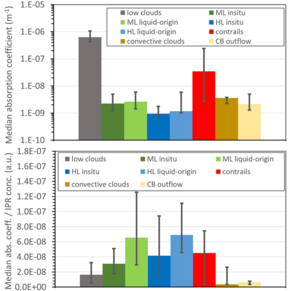
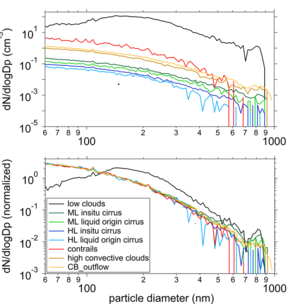
Absolute and particle number normalized residue size distribution for different cloud types. ML and HL stand for mid-latitude and high latitude, respectively.
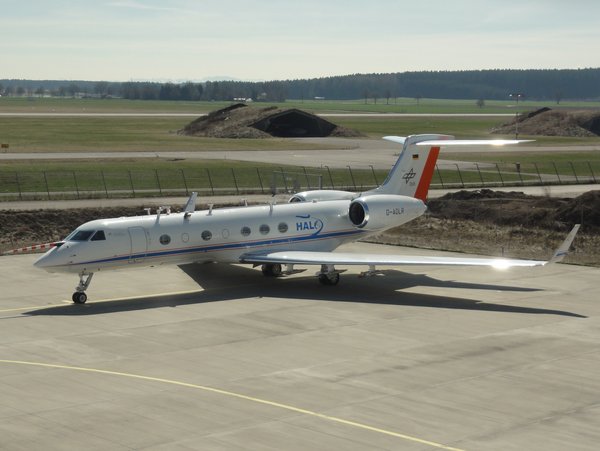
The CIRRUS-HL mission is a joint research project conducted by German research centers and universities as part of the HALO Priority Program (SPP-1294) of the German Research Foundation (DFG) bay means of the HALO research aircraft. One of the main objectives of the airborne mission is to gain new insights into the formation, properties, and climatic influence of ice clouds at high latitudes, in the region of the world with the strongest anthropogenic increase in surface temperature. A second focus is the investigation of the effects of air traffic on cirrus clouds, which was also carried out in flights over Central Europe and the North Atlantic flight corridor. The HALO cloud mission (22 research flights) took place in June and July 2021, combining in-situ and remote sensing instrumentation with state-of-the-art cloud sampling and new ice residue, aerosol particle, trace gas, and radiation measuring devices. More details on the scientific questions, research objectives, instrumentation, flight strategies, and participants are available on the CIRRUS-HL website.
The HALO-CVI (HALO-Counterflow Virtual Impactor) cloud inlet of TROPOS was operated as a key instrument in CIRRUS-HL. This special inlet collects liquid droplets and/or ice particles within clouds and makes their residues (CDR: cloud drop residuals; IPR: ice particle residuals) available for particle analysis. More details about the CVI working principle can be found here (Virtual Counterflow Impactor).